BLOG HOME

Events

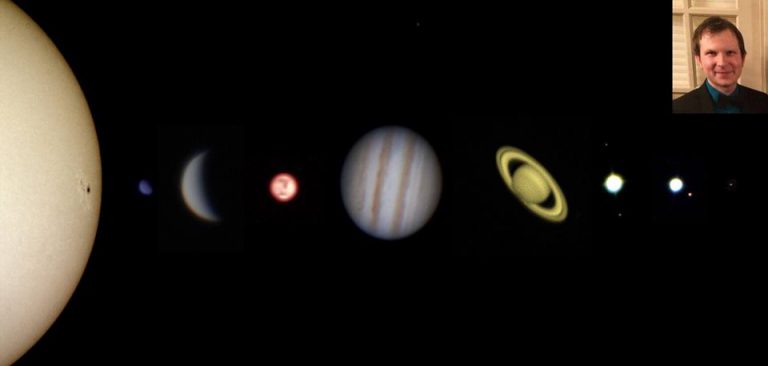
  • Wonders of the Universe: Exploring the Night Sky Through Astrophotography

    Friday April 10, 2020, 7:00pm – UW Space Place
    MAS is back!

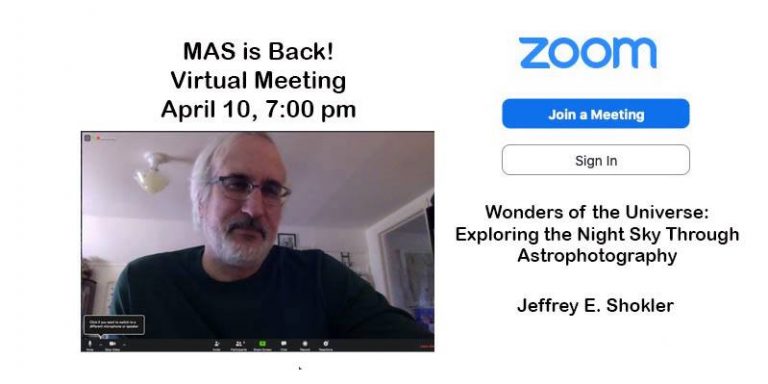
    We’re still observing public health advisories to avoid any face to face meetings so for our April meeting, MAS is going virtual!

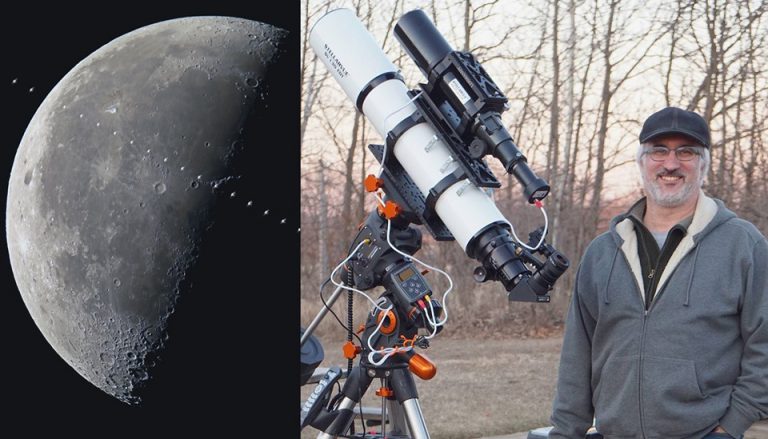
    Friday, April 10 our own Jeff Shokler will present “Wonders of the Universe: Exploring the Night Sky Through Astrophotography.” During his presentation he will share images captured of a wide variety of astronomical objects including the Moon, planets, lunar and solar eclipses, star clusters, nebulae, galaxies, and much more. Over the course of the presentation he will take the audience on a journey from objects close to home to those found in some of the most distant reaches and earliest time periods of the universe. Learn about how such pictures are captured and produced, about how we can gain scientific insights from astrophotos, and also about the sheer beauty present in the night sky.


    Jeffrey E. Shokler lives in Madison, Wisconsin where he is a university administrator currently serving as Associate Director for Advising Technology and Assessment at the University of Wisconsin-Madison. He has been an amateur astronomer for over three decades and an astrophotographer for five years. He is a long-time member, current Vice President, and past President of the Madison Astronomical Society.

    ++++++++++++++++++++

    In our first attempt at an online meeting, participation will be limited to members only. Prior to April 10, all MAS members will receive an email containing instructions on how to participate. It’s easy and requires only a few clicks to join the meeting. If your computer is able to stream video (Youtube, Netflix, etc.) you should have no trouble participating.

    After the meeting has concluded, we’ll make a copy of the full video available here.

    There’s no telling how long the COVID-19 lockdown may last, so this might only be the first of several virtual meetings. We hope not, but we’re trying to be ready for anything.
  • Hadean Zircons are not from Hell: New Evidence

    Friday March 13, 2020, 7:00pm – UW Space Place

    CANCELLED DUE TO COVID-19 PUBLIC HEALTH RECOMMENDATIONS

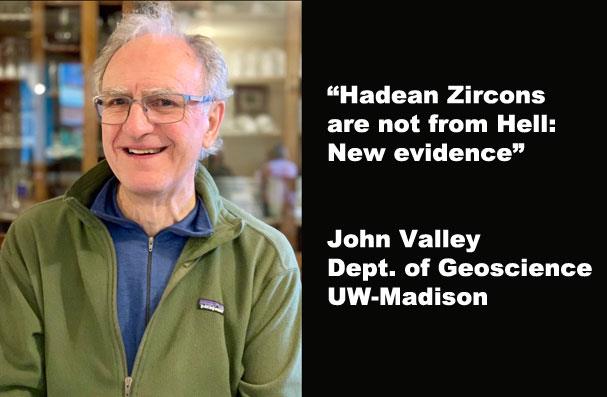
    Analysis of terrestrial zircons yields radiometric ages nearly as old as the Earth, but these ages (4 – 4.4 billion years old) have been challenged. Questions around Uranium-Lead (U-Pb) radiometric dating geochronology have been in play for over 100 years, and were first resolved in 2014 for a 4.374 billion year old zircon. These new results based on oxygen isotopes show that most of the Hadean Eon (ca. 4 – 4.4 billion years ago) was not “hell-like” as commonly believed and implied by the name. The earliest Earth was indeed hot, violent and inhospitable, but by 4.3 billion years ago its surface had cooled and the steam atmosphere condensed to form habitable oceans. Thus, it’s possible that life emerged almost 1 billion years earlier than the oldest known microfossils suggest.

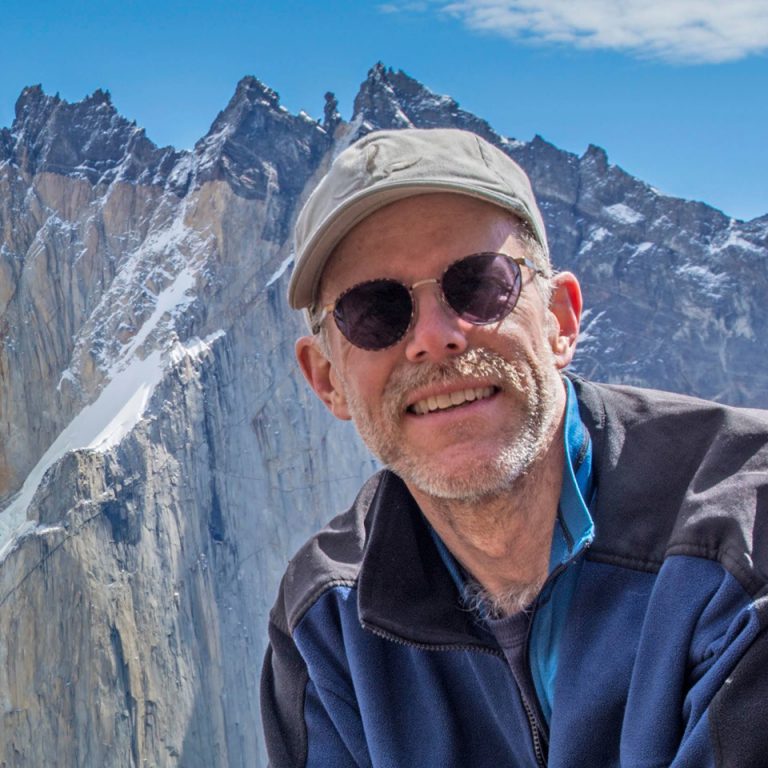
    John Valley retired from teaching in July 2019 after spending nearly four decades as a professor in the Department of Geoscience at UW. In April, he was elected to the National Academy of Sciences.

    In Oct of 2019, Valley received the Arthur L. Day Medal from the Geological Society of America (GSA) at the association’s annual meeting in Phoenix. The medal, one of the GSA’s highest honors, recognizes “outstanding distinction in contributing to geologic knowledge through the application of physics and chemistry to the solution of geologic problems.”

    Valley has spent much of the past two decades developing new techniques to explore and quantify isotope compositions from ultra-small samples. This led to his groundbreaking theory that there were oceans on Earth much earlier than previously thought—which opens the possibility that life may have existed much earlier than the oldest known micro-fossils—and a major shift in thinking and a change in geology textbooks.

    Location: UW Space Place, 2300 N. Park St., Madison, WI

  • Landscape Astrophotography – Diane Ramthun

    Friday January 10, 2020, 7:00pm – UW Space Place

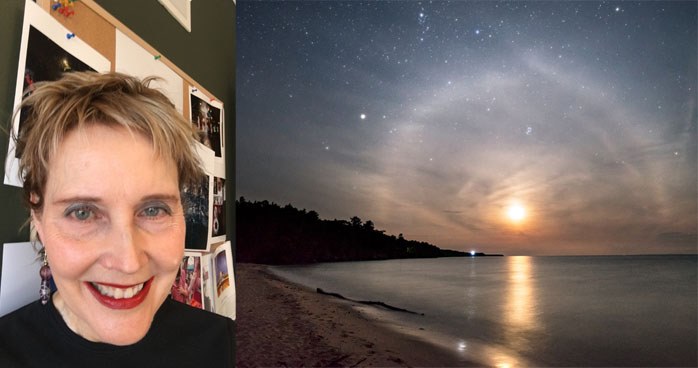
    Diane Ramthun is a Wisconsin-based photographer who enjoys doing night sky landscapes. Her talk will focus primarily on viewing and photographing the dark skies over Lake Superior.

    Diane: Years ago, while sailing into the remote reaches of Lake Superior, I saw the brilliant stars and Milky Way in the dark night skies for the first time. I wanted to capture what I saw and so began my interest in night sky photography. Capturing the connection of light between sky and earth has been my objective. At night over Lake Superior, the stars, Milky Way and planetary bodies cast vibrant and glowing reflections on the waters. By photographing these scenes, I hope to create a connection for the viewer to experience this exchange of light and see the beauty of a dark sky.

    Because my night sky photography takes place on remote islands reached by sailboat, I encounter many challenges in getting to a location and setting up a camera. The logistics of simply getting ashore for a shoot and then later returning by dinghy to the sailboat require much advance planning. And even then, surprises happen. I will talk about the challenges and adventures of night photography in a remote marine environment.

    About Diane Ramthun:
    Diane has studied with Brad Goldpaint, the 2018 Royal Museums of Greenwich Astronomy Photographer of the Year. She has attended his night photography workshops for years, most recently in Mt Shasta, CA and Utah. Her photography education started with a night photography class at the Milwaukee Institute of Art and Design. She has continued to take general photography and editing classes at MIAD over the years. Diane shoots with a Sony Alpha a7R III digital camera and a G Master 16-35 lens for nighttime work and uses large format film for daytime photography. Diane and her husband live in Middleton, WI.

  • Tales and Tails of Star Clusters – Kyle Cudworth

    Friday November 8, 2019, 7:00pm – UW Space Place

    Star clusters have been critical to our studies of stars and of our galaxy, as well as other areas of astrophysics. Besides their scientific importance, many are also beautiful to look at through a telescope of any size. I will discuss various topics involving star clusters, with a number of examples from my research through the past 45 years

    I will make some remarks on the current status of Yerkes Observatory, but the majority of my time will be spent discussing my research on star clusters.

    About the Speaker:
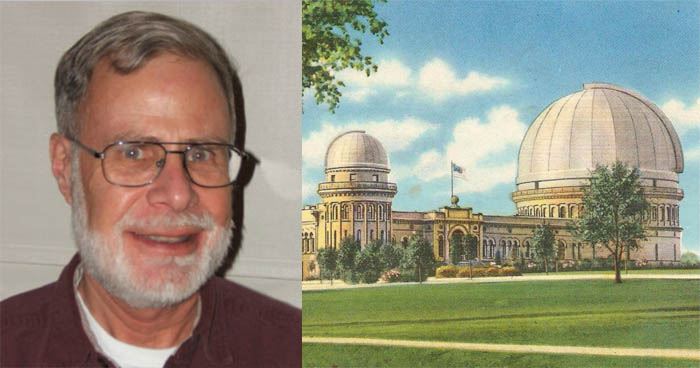
    Kyle Cudworth, former director of Yerkes Observatory in Williams Bay, WI, and Prof. Emeritus, The University of Chicago.

    Cudworth’s interest in astronomy dates to learning a bit about constellations as a Boy Scout, and then enjoying using the small telescope his parents gave him when he was in junior high school. He got a bachelor’s degree in physics at the University of Minnesota and then went to grad school at the University of California Santa Cruz, the headquarters for Lick Observatory. Cudworth received his PhD there in 1974 (having spent close to 100 nights observing planetary nebulae with the 36-inch refractor) and immediately came on the University of Chicago faculty at Yerkes Observatory. He became director of Yerkes in 2001 and served as director through the time of transition for Yerkes from over a century of being primarily a research facility to becoming primarily an education and outreach facility. After officially retiring in 2012, He has continued some research and considerable involvement in education and outreach activities there.

  • Astrobiology: OHLALA Project (Origins of Life, Artificial Life, & Astrobiology)

    Friday October 11, 2019, 7:00pm – UW Space Place

    Description: OoLALA was created to bring together scientists and engineers who are working to solve some of the deepest mysteries associated with life’s origins and distribution in the universe, as well as inspire others to join the effort. In this presentation, I will talk about the launch of this new initiative and discuss examples of OoLALA research being conducted right here in Madison, including my own on the chemical origins of life on Earth.

    About the Speaker: Lena Vincent obtained her Bachelor’s degree in Molecular & Cell Biology from California State University, Long Beach and was then awarded a research fellowship by the California Institute for Regenerative Medicine at City of Hope Cancer Hospital to study the role of stem cells in cancer drug resistance. She then got a Master’s degree in Biology from California State University-Northridge, where she worked on “hacking” normally harmful bacteria to act a beneficial drug delivery systems instead. She is currently a graduate student at the University of Wisconsin-Madison where she is pursuing an interdisciplinary PhD in Astrobiology and Prebiotic Chemistry. As a member of David Baum’s research group, she is using laboratory experiments to reconstruct the earliest stages in the origins and evolution of life.

  • The first billion years on Earth and Mars: A geologist’s perspective – Clark M. Johnson

    Friday September 13, 2019, 7:00pm – UW Space Place

    Despite the likelihood of early habitability on both Earth and Mars, the geologic evolution of these two planets, and the rock record they preserve, is quite different. Plate tectonics on Earth played a central role in evolution of our biosphere, and yet has destroyed much of the early Earth rock record, creating great challenges for finding evidence for early life on Earth. Mars did not have Earth-style plate tectonics, but the evidence is clear that Mars was habitable very early in its history. Preservation of the early Mars geologic record is excellent, raising the possibility that it might contain evidence for the earliest life in the Solar System. Of course, geologic field work on Mars is a bit more difficult than on Earth. This talk will explore the geologic evolution of these two planets in their first billion years or so, highlighting evidence for habitability and life.

    About the Speaker:
    Clark M. Johnson Johnson is the Vilas Distinguished Professor of geoscience at the UW Madison. His specialties are Isotope Geochemistry, Astrobiology, Geochronology, & Petrology. His primary research interests lie in application of stable and radiogenic isotopes to study of ancient life and crust and mantle evolution. This includes topics ranging from astrobiology to the origin of igneous rocks and evolution of volcanic systems. He is also interested in mountain building and metamorphism, as well as low-temperature studies involving diageneis, sedimentary provenance, migration of ancient people, and geomicrobiology. He is the principle investigator for the Wisconsin Astrobiology Research Consortium.

  • Donald Park Star Party

    August 2019 – Donald Park

    1945 State Road 92, Mount Horeb, Wisconsin

    The Donald Park star party is a family friendly event at a lovely county park. This is a chance to see the stars and planets through many different telescopes and binoculars – bring your blanket or lawn chair and sit back later in the evening for a night of watching meteors.

    Presentation for guests on meteor showers and planets by the Madison Astronomical Society before the stars come out. Sunset is about 8:08 pm, observing planets can begin about that time with fainter objects as it gets darker. Temps usually fall a bit after sunset so dress accordingly.

    Donald Park of Dane County

  • Chasing Shadows: Planning for and Imaging ISS Transits of the Sun and Moon – Jeffrey E. Shokler

    Friday August 9, 2019, 7:00pm – UW Space Place

    How do you catch something travelling at 17,500 mph as it moves between you and a target that might be 92 million miles away (or maybe only 240,000 miles away)? Longtime MAS member and astrophotographer Jeffrey Shokler will show us how to plan for International Space Station transits of the Sun and Moon, and also about his recent experiences capturing images of those events. You’ll learn about on-line planning tools, strategies for the week before, day before, and day of in terms of positioning and set-up. Jeff will also share the approaches he has taken to both capturing and processing the transit data in order to create finished images of ISS transits.

    About the Speaker:
    Jeffrey E. Shokler is a current member, Vice President, and past President of the Madison Astronomical Society. An amateur astronomer for over 30 years, only five years ago Jeff took the dive into astrophotography – imaging with DSLR cameras and, most recently, with a dedicated CCD camera.

  • Observing Our Solar System – Martin Mika

    Friday July 12, 2019, 7:00pm – UW Space Place

    The talk will outline the basics of our solar system: history, characteristics of the planets, how they move, and how to observe them with amateur telescopes. I will then also discuss some imaging techniques and touch on citizen science projects that can be undertaken by amateurs, with a few examples from some of the top planetary imagers around the world.

    About the Speaker:
    Martin Mika is a long time observer and astrophotographer and is the Observatory Director for the MAS.

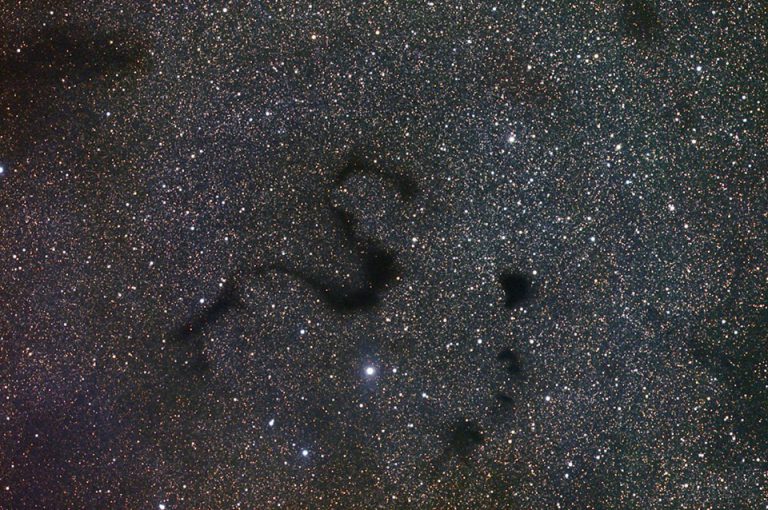
  • The Milky Way and Its Dark Nebulae – Walter Piorkowski

    Friday June 14, 2019, 7:00pm – UW Space Place

    This talk covers how the Milky Way is portrayed in charts and atlases, how to plan for and observe dark nebula and how these objects are cataloged. I will also show a selection of my 2×3 degree fields of the DN and discuss the “low extinction” windows in the Milky Way.


    About the Speaker:
    Walter Piorkowski is an amateur telescope and instrument maker. He is the former President and member of the board (14 years) of the Chicago Astronomical Society and Alder Planetarium (Chicago), Evening Courses instructor 1972 – 1980. He was Technical Support Adviser to Oberlin College’s CUREA program at Mt. Wilson observatory. Walter also was an Astro-Physics Mount Assembly Supervisor for 28 years.