Friday, October 15, 2021 7:30 – 9:30PM – Monona Terrace Convention Center
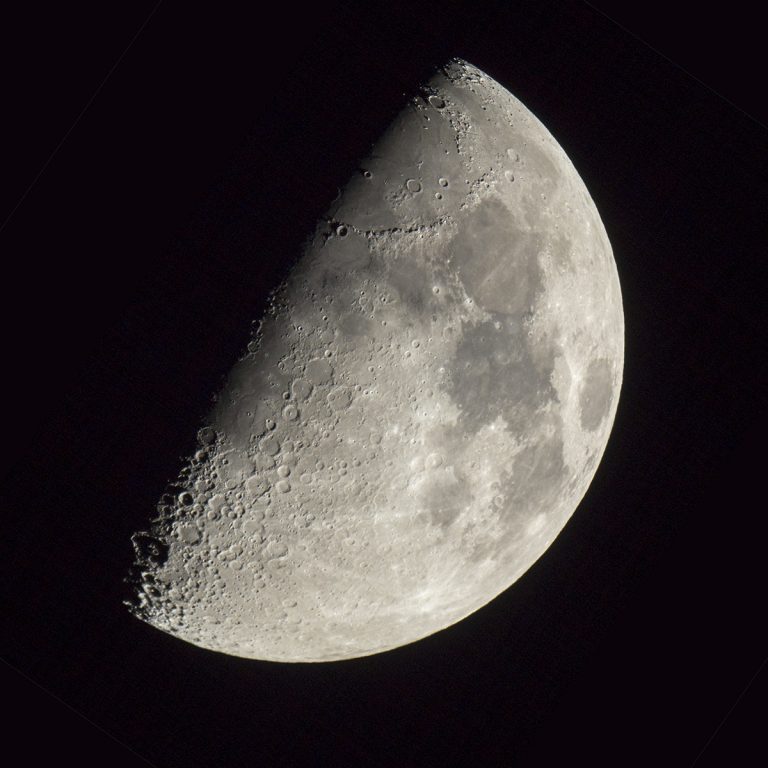
Take a live guided tour of our Moon and other celestial objects in our solar system with members of the Madison Astronomical Society (MAS).
Program Highlights:
· Track #1 – Live Telescope Feed (weather permitting) – Explore the surface of the Moon and other celestial objects through telescopes provided by MAS members.
· Track #2 – Sky Talk (virtual planetarium sky show) – Take a virtual tour of the night sky using sky simulation software. Two different 20-minute programs will be presented and repeated.
· Track #3 – YouTube Channel (informational and educational videos) – Visit our YouTube channel and select from a number of videos, presented by members of MAS, to enhance your event experience.
Advanced registration is required through Eventbrite. Prior installation of the Zoom application is recommended to participate.
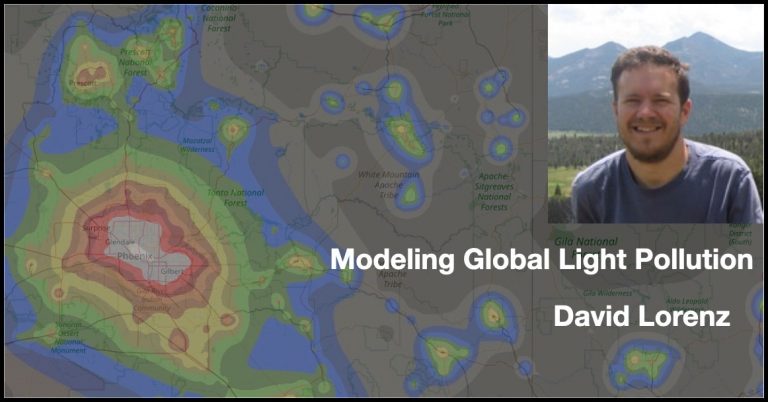
In this talk, I discuss my light pollution atlas, light pollution modeling, and recent trends in light pollution across the world. A light pollution atlas (artificial night sky brightness) is distinct from the maps that show the lights as they would appear from orbit in space looking down. These space-view maps are the input data to a model of the propagation, extinction, and scattering of light in the atmosphere. The output of the model is the estimated artificial light pollution at zenith. I will also use the light pollution model to understand 1) the role of atmospheric aerosols (fine solid particles or liquid droplets suspended in the air) on light pollution and 2) the role of the direction of light propagation from light sources on light pollution (nearly horizontal light beams are the most harmful).
David Lorenz is an amateur astronomer with a professional background in the atmospheric sciences. His favorite astronomical target is the milky way from dark skies with naked-eye and binoculars. In the past, when seeking out dark skies, he relied heavily on the original global light pollution atlas created by Cinzano et al in 2001. Later on, when he grew impatient with the lack of updates to the atlas, he decided to repeat the calculations of Cinzano on more recent satellite data. He has continued to update the atlas through the present. He currently works at the Center for Climatic Research at the University of Wisconsin-Madison.
Due to the accelerating infection and hospitalization rate due to COVID-19 Delta, MAS HAS MADE THE DECISION TO STAY VIRTUAL FOR OUR OCTOBER MEETING. The October meeting will be hosted with Zoom as before. MEMBERS WILL RECEIVE AN EMAIL WITH LINKS AND INSTRUCTIONS a day or so before the event. Again this month we are opening the virtual meeting up to our web followers who may want to join in. If you would like to attend the MAS virtual meeting, send an email to madisonastro.info@gmail.com by noon Friday, Oct. 8 to let us know of your interest. We will email you the instructions and link by 3pm that day which will get you into the meeting by 7:30 on Friday evening.
Friday September 10, 2021, 7:00pm – UW Space Place
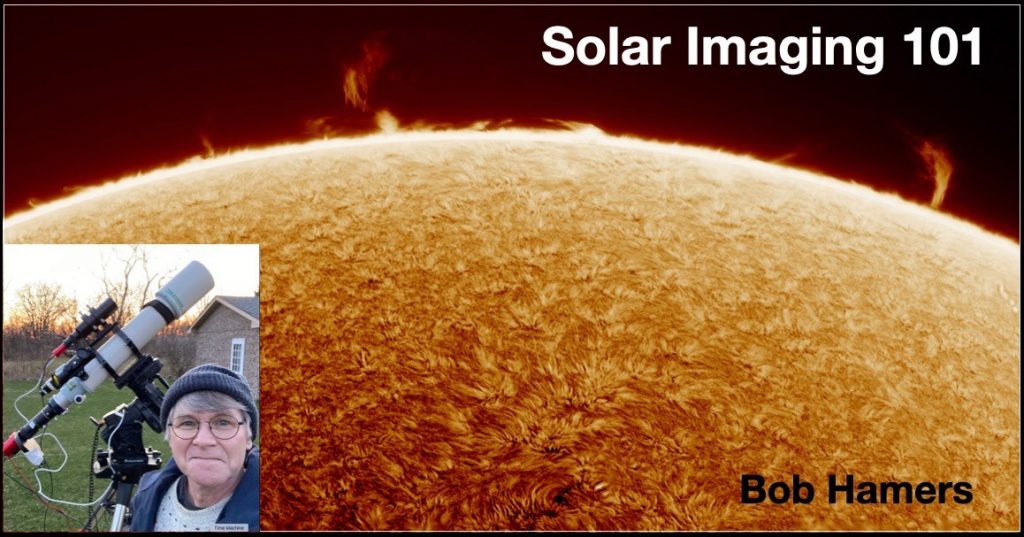
Our nearest star – the Sun – offers an ever-changing variety of astronomical phenomena, including prominences, sunspots, filaments, and prominences, that reveal the sun’s weather and can be observed from earth. As we come out of the solar minimum, solar activity is already rapidly ramping up with sunspots and solar storms. In this talk, I will give an introduction to solar imaging, some of the equipment and techniques involved used by amateur astronomers, with some examples from my own work.
Bob Hamers is a professor of chemistry at UW-Madison with a longstanding interest in space and astronomy. At UW his research centers on using light and electrons to characterize solids and nanomaterials. As an amateur astronomer, he discovered MAS about 5 years ago and enjoys both deep-sky imaging and solar imaging.
Due to the accelerating infection and hospitalization rate due to COVID-19 Delta, MAS HAS MADE THE DECISION TO STAY VIRTUAL FOR OUR SEPTEMBER MEETING. The September meeting will be hosted with Zoom as before. MEMBERS WILL RECEIVE AN EMAIL WITH LINKS AND INSTRUCTIONS a day or so before the event. Again this month we are opening the virtual meeting up to our web followers who may want to join in. If you would like to attend the MAS virtual meeting, send an email to madisonastro.info@gmail.com by noon Friday, Sept. 10 to let us know of your interest. We will email you the instructions and link by 3pm that day which will get you into the meeting by 7:30 on Friday evening.
Stories of the Milky Way casting a shadow are common but details are elusive. Whenever someone wants to brag about the great dark skies they experienced they often trot out the “it was so dark you could see your shadow by the light of the Milky Way” line. Asking follow-up questions results in repetition and hand-waving.
But could it be true? Is it possible? After all, the Milky Way is large, diffuse, low contrast, and faint. The sun and moon cast shadows. Bright point sources cast shadows. It’s even said that Venus or Jupiter can cast shadows. Can the huge Milky Way, spread across 90 degrees of sky (or more), cast a shadow? In this talk, we move beyond hearsay, legend, and myth and attempt to nail down some facts and experimental results. I have been working on this talk in some form for more than 10 years and I’ve finally got some photographic evidence to show. Don’t miss this one. It may change the way you think about dark skies!
John Rummel is a long-time member and former president of the MAS. He has put an embarrassing number of miles on his car in pursuit of dark skies in the contiguous United States.
Due to the accelerating infection and hospitalization rate due to COVID-19 Delta, MAS HAS MADE THE DECISION TO STAY VIRTUAL FOR OUR AUGUST MEETING. The August meeting will either be hosted with Zoom as before, or streamed via our Youtube channel. MEMBERS WILL RECEIVE AN EMAIL WITH LINKS AND INSTRUCTIONS a day or so before the event. Again this month we are opening the virtual meeting up to our web followers who may want to join in. If you would like to attend the MAS virtual meeting, send an email to madisonastro.info@gmail.com by noon Friday, August 13 to let us know of your interest. We will email you the instructions and link by 3pm that day which will get you into the meeting by 7:30 on Friday evening.
View the MAS YouTube channel by following this link.
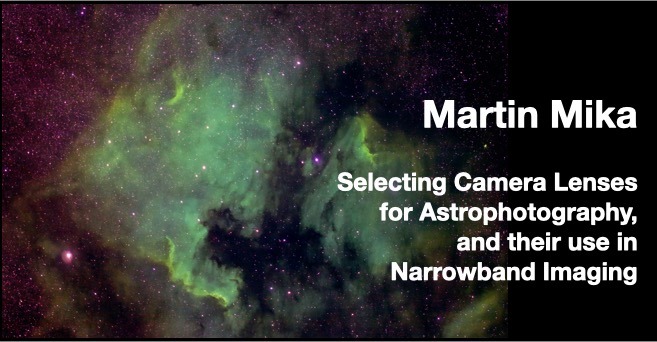
Telescopes for astrophotography can be large and heavy instruments, costing thousands of dollars. For those who own DSLR cameras, there are a wide selection of available lenses that make an excellent lightweight, low cost, and easy to use platform for starting in astrophotography. We will look at some advantages (and disadvantages) of using camera lenses when photographing the night sky and examine characteristics of lenses ideally suited for astrophotography. In the second half of the presentation, we will take an introductory look at using narrowband filters for astrophotography, with emphasis on wide-field astrophotography. When narrowband filters are combined with a fast lens, a universe of otherwise hidden objects is within reach to those imaging in light polluted skies, in what can be a very lightweight and portable setup.
Martin Mika is currently serving as the Observatory Director for MAS and Laboratory Manager for Columbus Chemical Industries. He has a background in chemistry and astronomy, and currently works as a chemist performing trace level chemical analysis.
MAS has been holding virtual meetings for the duration of the COVID pandemic. While we expect to be returning to in-person meetings soon, as of the planning of this event, the July meeting is being treated as a virtual event, hosted with Zoom. Members will receive an email with a link and instructions to join a day or two before the event. Again this month we are opening the virtual meeting up to our web followers who may want to join in. If you would like to attend the MAS virtual meeting, send an email to madisonastro.info@gmail.com by noon Friday, July 9 to let us know of your interest. We will email you the Zoom link at 3pm that day which will get you into the meeting by 7:30 on Friday evening.
Single-photon avalanche diodes (SPADs) are an emerging sensor technology capable of detecting and time-tagging individual photons with picosecond precision. Despite (or perhaps, due to) these capabilities, SPADs are considered specialized devices suitable only for photon-starved scenarios, and restricted to a limited set of niche applications. This raises the following questions: Can SPADs operate not just in low light, but in bright scenes as well? Can SPADs be used not just with precisely controlled active light sources such as pulsed lasers, but under passive, uncontrolled illumination like cellphone or machine vision cameras?
I will describe our recent work on designing computational imaging techniques that (a) enable single-photon sensors to operate across the entire gamut of imaging conditions including high-flux scenes, and (b) leverages SPADs as passive imaging devices for ultra-low light photography. The overall goal is to transform SPADs into all-weather, general-purpose sensors capable of both active and passive imaging, across photon-starved and photon-flooded environments.
Mohit Gupta is an Assistant Professor of Computer Sciences at the University of Wisconsin-Madison. He received B. Tech in Computer Science from IIT-Delhi, Ph.D. from the Robotics Institute, Carnegie Mellon University, and was a postdoctoral research scientist at Columbia University. He directs the WISION Lab with research interests broadly in computer vision and computational imaging. He has received best paper honorable mention awards at computer vision and photography conferences in 2014 and 2019. His research is supported by NSF, ONR, DARPA, Sony, Intel and Wisconsin Alumni Research Foundation.
The June meeting will be a virtual event, hosted with Zoom. Members will receive an email with a link and instructions to join a day or two before the event. Again this month we are opening the virtual meeting up to our web followers who may want to join in. If you would like to attend the MAS virtual meeting, send an email to madisonastro.info@gmail.com by noon Friday, June 11 to let us know of your interest. We will email you the Zoom link at 3pm that day which will get you into the meeting by 7:30 on Friday evening.
In a modern world whose immediate history remains informed by the Cold War, it is easy for us to see the ways in which science and geopolitics intermingle. It is no secret, for example, that the rockets that power our modern space missions are products of Cold War weapons programs, nor is it a secret that the Apollo program was itself a direct response to the Soviet Union’s own triumphs in space exploration. Just as one cannot speak of the Cold War without conjuring the specter of nuclear weapons, one likewise cannot speak of the Cold War without remembering an era when espionage and spycraft came fully into the modern age. But espionage and the guarding of scientific secrets is not unique to modernity. Between 1614 and 1626, the Italian nobleman Pietro della Valle journeyed throughout much of what we today call North Africa, the Middle East, and the West-Indian coast. His long journey had a single purpose: to obtain lost books and ancient knowledge that he and his patrons believed would vindicate Copernican cosmology. He also sought targets of opportunity, purchasing books on science and magic, any scriptures pre-dating the Vulgate, and any maps he encountered. Beyond this, his diaries reveal a keen interest in local fortifications and water sources, often describing them in detail and commenting on their seeming strengths and weaknesses. These activities unsurprisingly piqued the interest of local authorities who often forbade local merchants and book sellers from trading with or revealing craft secrets to him. This talk will tell the story of how della Valle conspired with the Jesuit astronomer Christopher Borri to convert the Muslim astronomer Zayyn al-dīn al-Lārī, and how Tycho Brahe’s novel discoveries came to be at the heart of that plan. My goal is to provide an opportunity to reflect on the ways in which regional and factional intrigue helped shape astronomy in the seventeenth century, as well as the ways in which della Valle used astronomical knowledge as capital for extracting secrets and enticing forbidden transactions.
Biographical Sketch:
James Barnes is currently a dissertator and Lindberg Distinguished Graduate Fellow in the History of Science, Medicine, and Technology Program at the University of Wisconsin-Madison. His research interests include the history of astronomy and cosmology, navigation, scientific practice, science and religion, and knowledge production across cultures. His current research focuses on the Jesuit astronomer Christopher Borri, the institutionalization of science in Europe beginning in the 17th century, and the relationship between science and the state.
The May meeting will be a virtual event, hosted with Zoom. Members will receive an email with a link and instructions to join a day or two before the event. Again this month we are opening the virtual meeting up to our web followers who may want to join in. If you would like to attend the MAS virtual meeting, send an email to madisonastro.info@gmail.com by noon Friday, May 14 to let us know of your interest. We will email you the Zoom link at 3pm that day which will get you into the meeting by 7:30 on Friday evening. See Less
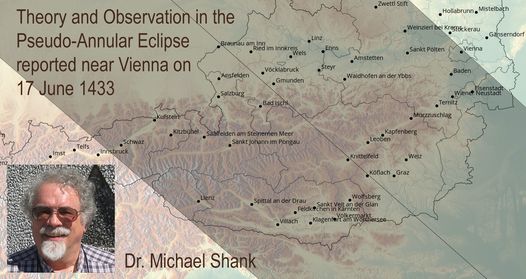
This talk analyzes a solar eclipse that is described as annular, but that other reports and modern calculations show to have been very total. I explore the reasons for this odd state of affairs, since most eclipse observers are impressed by the darkness, not what’s happening immediately around the Sun. I argue that the report comes from a theoretically sophisticated observer with access to a 14th c. annular eclipse report that shaped his observation, which was then used to refute the concentric-sphere astronomy of al-Bitruji, an influential 12-13th century Arab astronomer.
Michael H. Shank is Professor emeritus in the now-defunct Department of the History of Science at the UW-Madison, specializing in 14-15th-c. natural philosophy and astronomy. Most recently, he was Visiting Professor in the Department of History of Science at Tsinghua University (Beijing; fall 2017, fall 2019) and Visiting Fellow at the Institute for Advanced Study in the Humanities and Social Sciences, Zhejiang University (Hangzhou; fall 2018).
The April meeting will be a virtual event, hosted with Zoom. Members will receive an email with a link and instructions to join a day or two before the event. Again this month we are opening the virtual meeting up to our followers who may want to join in. If you would like to attend the MAS virtual meeting, send an email to madisonastro.info@gmail.com by noon Friday, April 9 to let us know of your interest. We will email you the Zoom link at 3pm that day which will get you into the meeting by 7:30 on Friday evening.
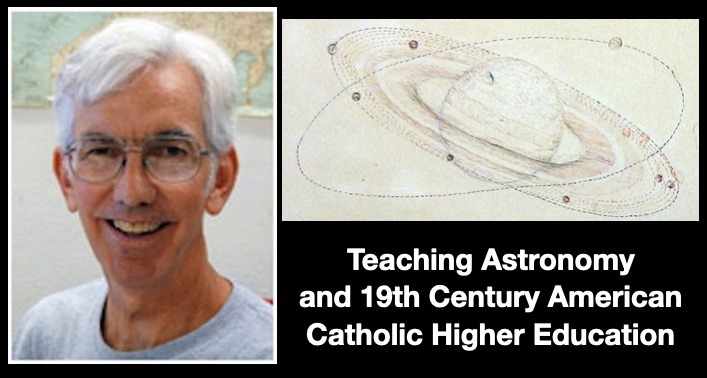
Pretend it is 1815 and you are a student at Georgetown College in Washington, D.C., could you, with the aid of a terrestrial globe, determine the latitude and longitude of Washington City? Or maybe the more taxing problem to find the time of the sun’s rising and setting, and the length of the day and night at any place? These and over a hundred other problems awaited you in an 1812 book on the use of the globes and practical astronomy employed at this Jesuit college founded in 1789. Written by the Irish-born Jesuit James Wallace, this volume is one example of how the sciences like astronomy enjoyed a confirmed place in American Catholic colleges in the nineteenth century. My talk will explore this and two other later historical episodes to show how astronomy figured into Catholic higher education for students and their teachers alike.
Dana A. Freiburger, Doctoral CandidateHistory of Science Program, UW-MadisonDana holds broad interests in histories of science and technology in the United States and Japan over the last two hundred years.
He received a B.S. in Computer Science in 1979 and enjoyed a career in the computer industry until smitten by history of science. Dana escaped Silicon Valley and went on to earn masters degrees in history of science from the University of Oxford in 1999 and the University of Wisconsin-Madison in 2002 where he now works to finish his dissertation on the place of science in nineteenth-century American Catholic higher education; his talk today draws from that ongoing project.
The March meeting will be a virtual event, hosted with Zoom. Members will receive an email with a link and instructions to join a day or two before the event. Again this month we are opening the virtual meeting up to our web followers who may want to join in. If you would like to attend the MAS virtual meeting, send an email to madisonastro.info@gmail.com by noon Friday, March 12 to let us know of your interest. We will email you the Zoom link at 3pm that day which will get you into the meeting by 7:30 on Friday evening.
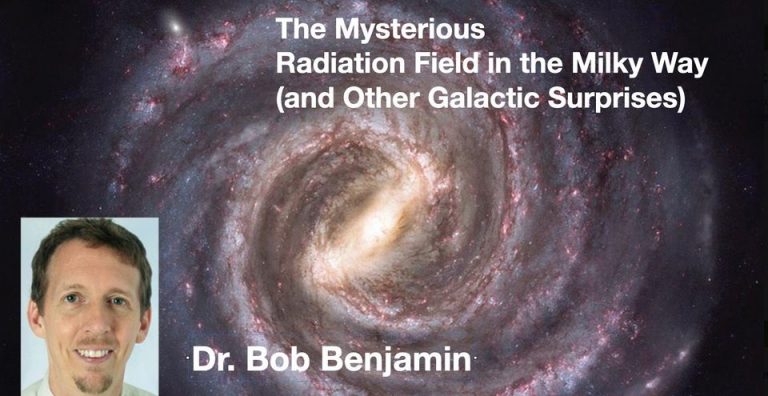
Our Milky Way Galaxy is an “island” of stars, interstellar gas, and dark matter in the vast expanses of intergalactic space. In this talk, I will focus on the interstellar (mostly hydrogen) gas. This gas fills the space between the stars, and some fraction of it is ionized: radiation from the stars has enough energy to remove the electron from the proton. By studying the resulting emission lines from this gas with the Wisconsin H-alpha Mapper, we have discovered that the central parts of the Milky Way are permeated by an unusual radiation field. I describe how we ended up making the discovery and why it is significant. As a bonus, I will describe the discovery of a thirty-degree arc of ionizing gas centered on the handle of the Big Dipper.
Prof. Bob Benjamin obtained his Ph.D. at the University of Texas at Austin in 1994, and joined the physics faculty of the University of Wisconsin-Whitewater in 2003. He is interested in all things Milky Way, having participated in two major Wisconsin surveys of the Milky Way galaxy: the Wisconsin H-alpha Mapper and the NASA-sponsored Spitzer Space Telescope GLIMPSE survey of the galactic plane.
The February 12th meeting will be a virtual event, hosted with Zoom. Members will receive an email with a link and instructions to join a day or two before the event. Again this month we are opening the virtual meeting up to our web followers who may want to join in. If you would like to attend the MAS virtual meeting, send an email to madisonastro.info@gmail.com by noon Friday, Feb 12 to let us know of your interest. We will email you the Zoom link at 3pm that day which will get you into the meeting by 7:30 on Friday evening.